

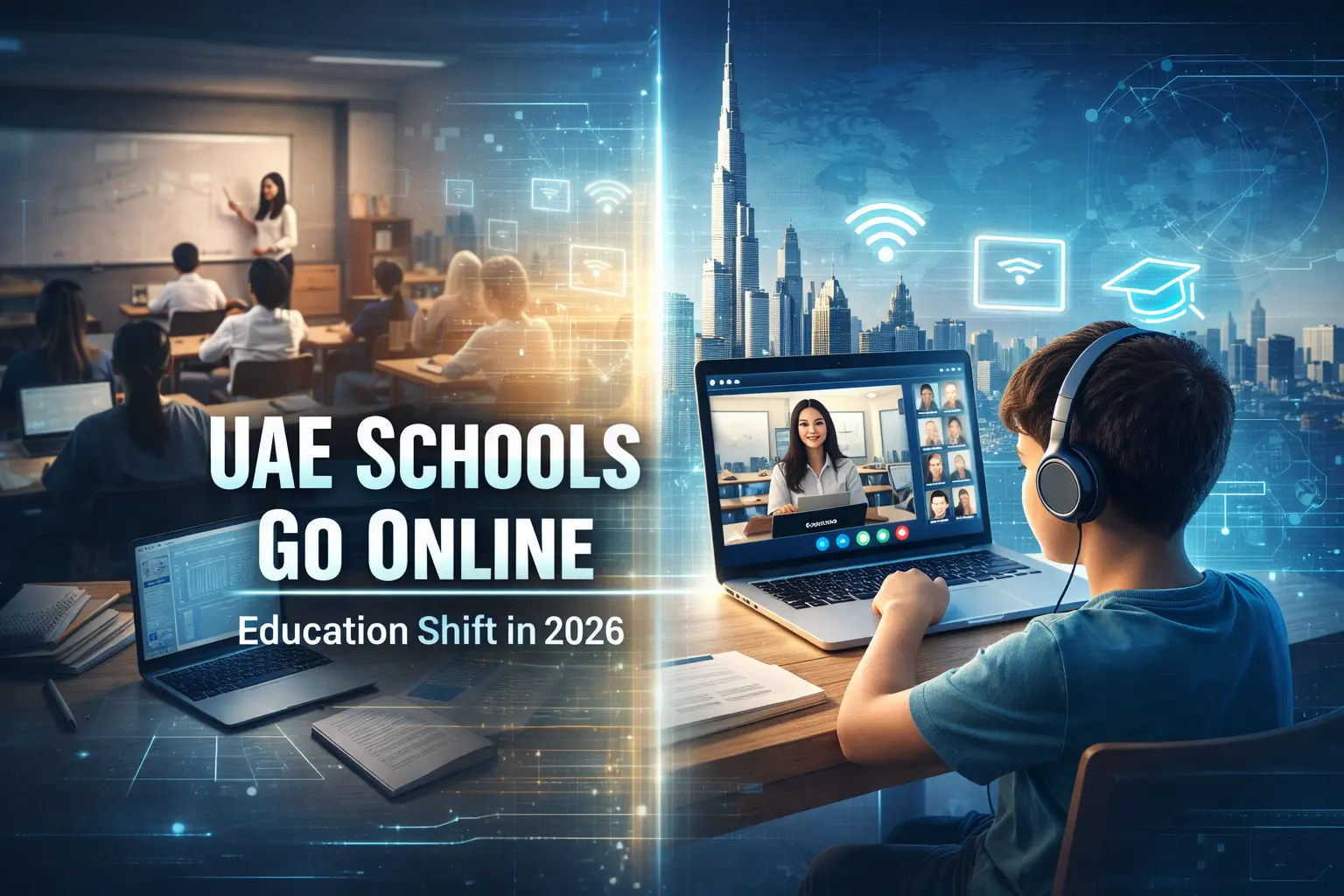
In the UAE, there is a significant change in the education system in 2026, with schools and universities returning to online education due to continuing tensions in the region. This shift is an indicator of a rising demand for flexibility, safety, and continuity in education.
Since Indian curriculum schools and international schools have most of them, they started the academic year online. This shift is not a mere one-time event, but it is speeding up a larger change in the provision of education throughout the nation.
Why UAE Schools Are Moving Online in 2026
Safety is the key factor that brought about the transition to online education. Governments have now expanded distance learning in schools, nurseries, and universities to safeguard the students, educators, and employees in a time of regional unrest.
Distance learning will continue until at least April 17, 2026, and the officials will be reviewing the situation on a regular basis.
Millions of students throughout the UAE are impacted by this decision, which demonstrates the impact of the outside world on the education system. Educational institutions are placing a high emphasis on well-being and making sure that academic development is not interrupted.

Academic Year Begins with Virtual Classrooms
The 2026-27 academic year has begun, with most schools offering classes online. Specifically, Indian schools have already initiated the remote learning sessions and prepared the structured lesson plans and support systems.
This will make sure that students do not waste time learning. Schools are turning to digital platforms to administer lectures, assignments, and exams, and are still keeping it a normalcy even in the circumstances.
The same has been done in universities. Distance learning has been extended through the semester by institutions such as the American University in Dubai, with safety being the most important consideration.
Rise of Alternative Schooling Models in the UAE
The transition to online education has also increased the development of alternative models of education in the UAE. Educational institutions are currently considering hybrid education, online classrooms, and adaptable approaches to education.
Distance learning is no longer an alternative. It is turning out to be an essential component of the education system, allowing students to study wherever they want.
A lot of schools are introducing virtual tasks, individualized learning assistance and communication to promote interaction. Such innovations are keeping students connected and motivated even when they are not in the traditional classrooms.
How Schools Are Supporting Students and Families
Maintaining the engagement and support of the student is one of the greatest difficulties of the online learning process. The UAE schools have implemented a number of measures to solve this.
Teachers are restructuring lesson plans in order to alleviate academic stress and make the learning interactive.
Schools are also offering other resources such as virtual counseling, academic guidance and extracurricular activities. This holistic approach also ensures students keep on growing in terms of academics and emotionally.
Parents are very important in this system. The schools are collaborating with families to provide an enabling learning environment at home, providing advice on the timetables and learning schedules.

Changes in Exams and Assessments
Exams and assessments have also been affected by the move to online learning. Some of the large examination bodies have canceled or changed their exams due to the situation.
As an example, in the UAE, IB exams are canceled in 2026, and they have implemented other evaluation systems.
On the same note, CBSE and other boards have embraced the flexible approach to assessment where internal assessment, projects, and coursework are used to ascertain final grades.
These alterations are indicative of a larger shift towards a culture of ongoing assessment as opposed to the older method of exam-based evaluation.
Technology Driving the Education Transformation
This transition is centered around technology. Education is going online and schools are using digital platforms, virtual classrooms and online tools to deliver education effectively.
The UAE has been substantially investing in the infrastructure of digital education, particularly in the period of the COVID-19 pandemic. This has given it an easier time adapting to the prevailing challenges.
Students can now access lectures and online assignments as well as live interaction with teachers. These are the tools that are contributing to bridging the gap between the physical and virtual learning environments.
Benefits of Distance Learning in the UAE
Distance learning has several strengths, regardless of the challenges:
Flexibility
Learners have the opportunity to study at their pace and have better control over their schedule.
Accessibility
Students who travel or are interrupted find it easier to get an education anywhere.
Skill Development
The online learning assists the students in acquiring digital skills, discipline, and self-studying.
These benefits are contributing to the growing acceptance of alternative education models in the UAE.
Challenges Faced by Students and Educators
Online learning is not without challenges despite all the benefits it has.
Students can have problems in remaining focused, particularly at home. Social deprivation may also affect their general development.
On their part, teachers will need to be able to adjust to new technologies and approaches of teaching. It takes more effort and creativity to present interesting lessons online.
Some families may also experience barriers due to connectivity problems and access to devices, and thus, inclusive digital solutions are required.
Also Read: 3 Key Dubai Laws Every Construction Professional Must Know in 2026
What This Means for the Future of Education in the UAE
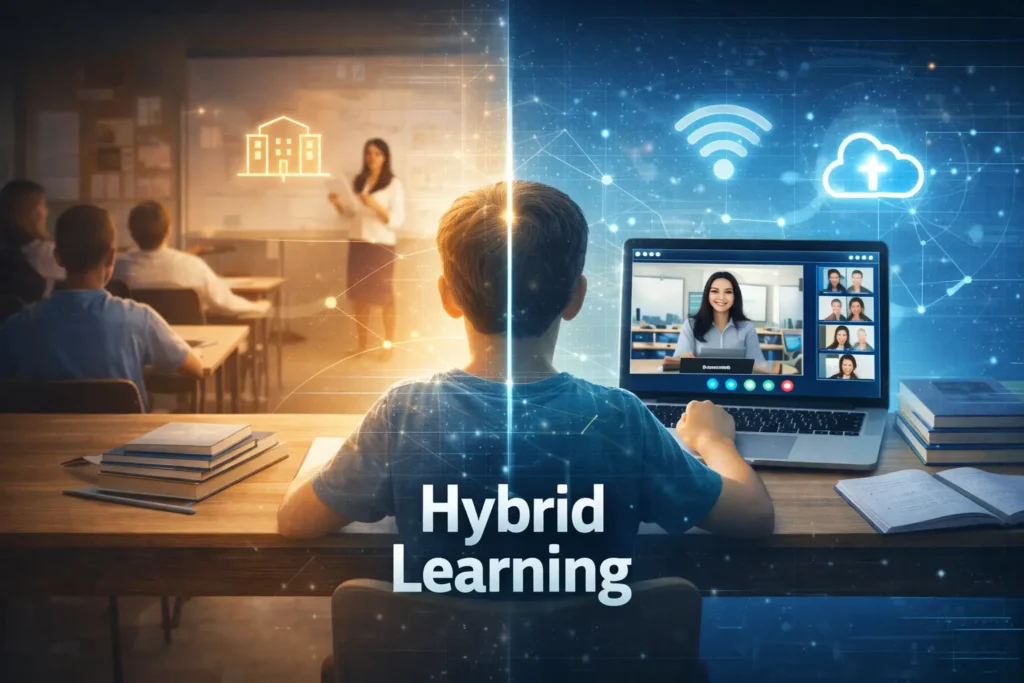
The prevailing condition is hastening the transformation of the education system in the UAE in the long-term. The hybrid learning models, which are a combination of online and in-person education, will probably become more widespread.
Another trend that schools are experimenting with is personalizing education, where schools can use data and technology to customize learning to individual students.
Such a change may restructure the conventional education system, turning it into more adaptable, accessible, and future-proof.
Key Takeaways for Parents and Students
This is a changing educational environment that parents and students have to adjust to. It is necessary to remain organized, have a routine, and be effective in the use of available resources.
Students are supposed to put more emphasis on developing digital skills and self-discipline, and parents are supposed to assist through a well-organized and conducive environment for learning.
Learning about these changes will enable the families to move through the transition with ease.