

The ongoing Iran-US-Israel conflict has intensified concerns across the Middle East, with the UAE now under global focus. As tensions rise, experts are warning about the possible consequences if the region gets further involved in the war.
Dubai and Abu Dhabi, known for luxury, tourism, and global investment, are now being discussed in the context of geopolitical risk. This shift in perception marks a significant moment for the UAE’s global image.
Jeffrey Sachs Issues Stark Warning
Top US economist Jeffrey Sachs has issued a strong warning regarding the UAE’s involvement in the conflict. He stated that if the country enters the war, major cities like Dubai and Abu Dhabi could become potential targets.
Sachs highlighted that these cities are not designed for warfare but as global hubs for tourism and finance. Their open infrastructure and economic focus make them more exposed in the case of escalation.
Why Dubai and Abu Dhabi Are Considered Vulnerable
Unlike heavily fortified military zones, Dubai and Abu Dhabi are built around openness and global accessibility. Their infrastructure supports tourism, business, and international investments rather than defense.
These cities function as global lifestyle and financial hubs, attracting wealthy investors and visitors. Entering a war scenario could fundamentally disrupt this purpose and increase perceived risk.
Real Conflict Already Impacting the UAE
The concerns are not just theoretical, as recent developments show real risks. Missile and drone-related incidents linked to regional tensions have already affected parts of the UAE.
Although most threats have been neutralized, falling debris and disruptions have raised concerns about safety. These incidents highlight how even indirect involvement can affect civilians’ daily lives.
Economic and Investment Risks Rising
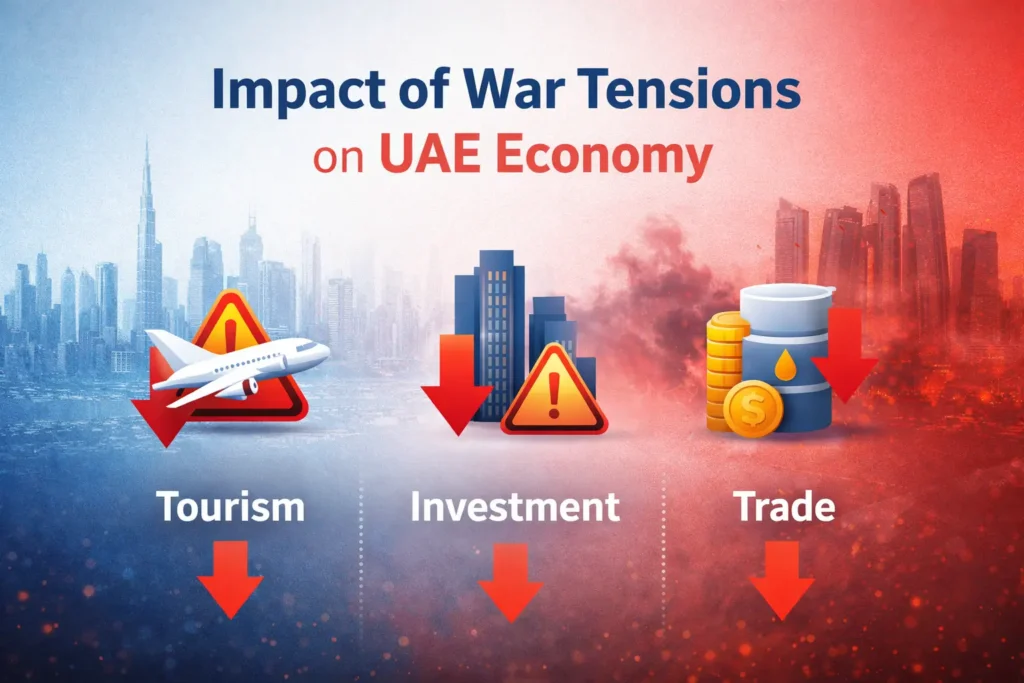
Dubai’s global reputation as a safe and stable investment destination is closely tied to regional peace. Any escalation in conflict can directly impact investor confidence and economic activity.
The ongoing tensions have already influenced global markets, energy supply chains, and investor sentiment. Financial volatility and uncertainty tend to slow down investment decisions.

Impact on Tourism and Business Appeal
Tourism is a key pillar of Dubai’s economy, attracting millions of visitors each year. However, geopolitical instability can quickly change travel perceptions and reduce tourist inflow.
Even limited security concerns or negative headlines can discourage international travelers. This can affect hospitality, retail, and real estate sectors simultaneously.
Investor Confidence Faces New Test
Dubai has long positioned itself as a safe haven for global investors, especially during uncertain times. However, ongoing tensions are now challenging that narrative.
Investors are becoming more cautious, especially in sectors like real estate and infrastructure. Stability remains a key factor for long-term investment decisions.
Regional Stability and Strategic Decisions
The UAE has historically balanced its relationships with global powers while maintaining regional stability. However, the current conflict is forcing more complex strategic choices.
Deeper involvement in the war could increase both security risks and economic pressure. The approach taken by the UAE will significantly influence future outcomes.
Also Read: Top 5 Relaxing Spa Deals in Dubai You Need to Book Right Now for Ultimate Wellness
Global Ripple Effects of the Conflict
The Iran-related tensions are not just regional but have global economic implications. Disruptions in oil supply and shipping routes can affect fuel prices and international trade.
As a key economic hub, the UAE is closely linked to these global shifts. Any instability in the region can create wider economic consequences.
Changing Perception of the Gulf Region
The ongoing conflict is reshaping how the Gulf region is viewed by global investors and businesses. What was once seen as a stable environment is now being reassessed.
Prolonged uncertainty could influence long-term investment strategies and economic planning. The perception of risk can have a lasting impact on growth and development.