

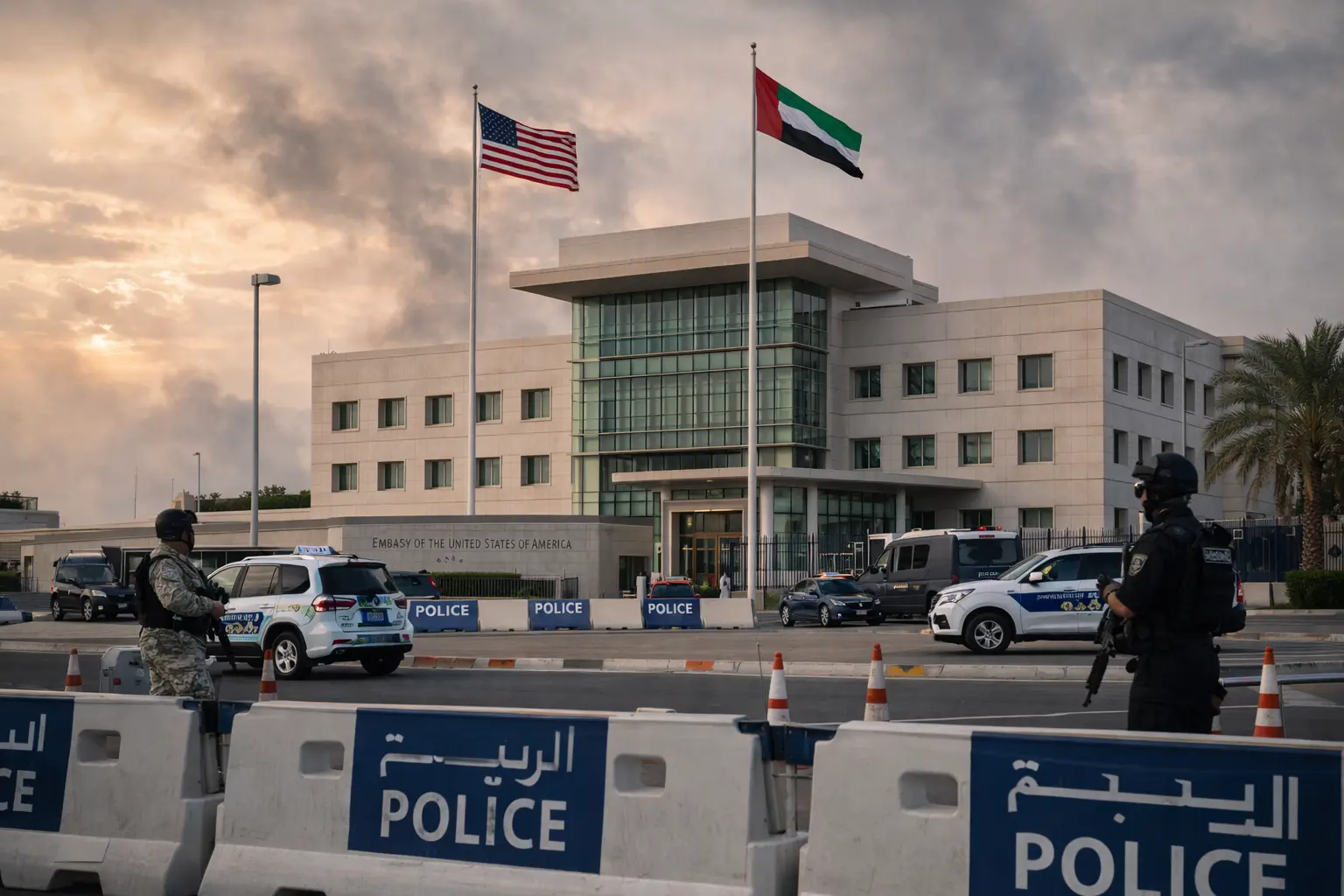
Security concerns across the Middle East have intensified after a suspected drone strike targeted the United States Consulate in Dubai. Following the incident, the US Embassy in Abu Dhabi and the Consulate General in Dubai announced a temporary closure of operations as a precautionary measure.
The decision comes amid a broader escalation of tensions in the region linked to the ongoing conflict involving Iran, the United States, and Israel. Authorities have increased security at diplomatic missions and key infrastructure while monitoring possible threats.
According to officials, the closures are meant to ensure the safety of diplomatic staff and visitors while authorities assess the situation and strengthen security measures.
Drone Strike Reported Near US Consulate in Dubai
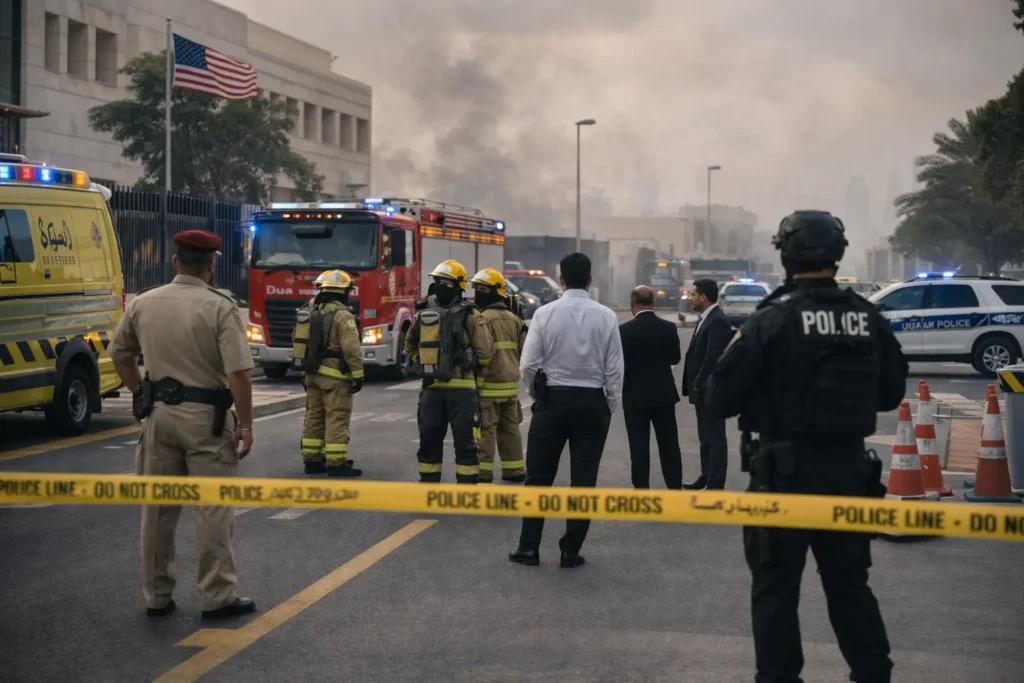
The immediate trigger for the closures was a suspected drone strike near the US Consulate General in Dubai. The drone reportedly hit a parking area close to the diplomatic building and sparked a small fire. Emergency teams quickly responded and managed to extinguish the flames without any reported injuries.
Authorities confirmed that the fire was contained within a short period and that consulate personnel were safe. Videos circulating on social media showed smoke rising from the area near the consulate compound shortly after the incident.
Although the damage was limited, the attack raised serious concerns about security risks for diplomatic facilities in the region.
Why the US Embassy and Consulate Were Closed
After the drone incident, the US State Department decided to suspend operations at its diplomatic missions in the UAE. Both the US Embassy in Abu Dhabi and the US Consulate in Dubai halted regular consular services until further notice.
Officials explained that the move was a precautionary measure due to the escalating regional security situation. Diplomatic missions in several Middle Eastern countries have taken similar steps in response to rising threats and drone activity.
The closure means that routine services such as visa appointments, passport processing, and public visits have been temporarily paused. Emergency services for American citizens may still be provided under special circumstances.
Conflict Between Iran, the US, and Israel Fuels Regional Tensions
The drone attack in Dubai is linked to a wider geopolitical crisis in the Middle East. The tensions escalated after joint military strikes by the United States and Israel targeted Iranian facilities and military infrastructure.
Iran responded with missile and drone attacks across the region, targeting various sites linked to US interests. Several Gulf countries, including the UAE, have reported intercepting aerial threats during the escalation.
As the conflict intensifies, diplomatic missions, airports, and military installations across the Middle East have become potential targets. This has prompted governments to strengthen security measures and issue travel advisories.
UAE Responds With Increased Security Measures
The United Arab Emirates has taken several steps to manage the security situation following the attack. Authorities confirmed that air defense systems have intercepted multiple threats and continue to monitor the skies closely.
Government officials have emphasized that the country remains committed to maintaining safety and stability. Security patrols have been increased around key locations, including diplomatic districts, airports, and government buildings.
Despite the tense environment, officials have reassured residents and visitors that the situation is under control and that emergency services remain fully prepared.
Also Read: Can Non-Muslims Enter Mosques in Dubai? What Visitors Need to Know
Travel Advisories Issued for US Citizens
In response to the escalating tensions, the US government has issued travel advisories for American citizens in the Middle East. Citizens living in or visiting the UAE have been urged to remain alert and monitor official updates.
Authorities also advised Americans to leave the region if commercial travel options are available. In some cases, citizens have been encouraged to use land routes if flights are unavailable.
The advisory reflects growing concerns about potential attacks on diplomatic facilities and transportation infrastructure during the conflict.
Impact on Travel and Consular Services
The temporary closure of the US Embassy in Abu Dhabi and the Dubai Consulate has affected several administrative and travel services. Visa processing for travelers planning to visit the United States has been delayed due to the suspension of routine operations.
Students, business travelers, and tourists who planned consulate appointments may need to reschedule their visits once services resume. Officials have said that updated information will be provided through official embassy channels.
Air travel disruptions in the region have also complicated travel arrangements for many residents and visitors. Airlines and airports are continuing to adjust schedules as security conditions evolve.
Drone Warfare Becoming a Growing Threat
The incident in Dubai highlights how drone warfare has become an increasingly common tool in modern conflicts. Drones are relatively inexpensive and can travel long distances, making them difficult to detect and intercept.
In recent years, several countries in the Middle East have reported drone attacks targeting military bases, oil facilities, and diplomatic buildings. Governments are investing heavily in air defense systems to counter these threats.
Experts say that diplomatic missions are particularly vulnerable because they often represent high-profile symbols of international relations.
Diplomatic Missions Across the Region on Alert
The UAE closures are part of a wider pattern of diplomatic missions increasing security across the region. Several embassies and consulates in the Gulf and neighboring countries have either reduced staff levels or temporarily suspended services.
Governments are also coordinating with local authorities to ensure diplomatic compounds remain protected. Additional security personnel, surveillance systems, and emergency protocols are being implemented.
Officials say the situation remains fluid and will depend largely on how the regional conflict evolves in the coming days.