

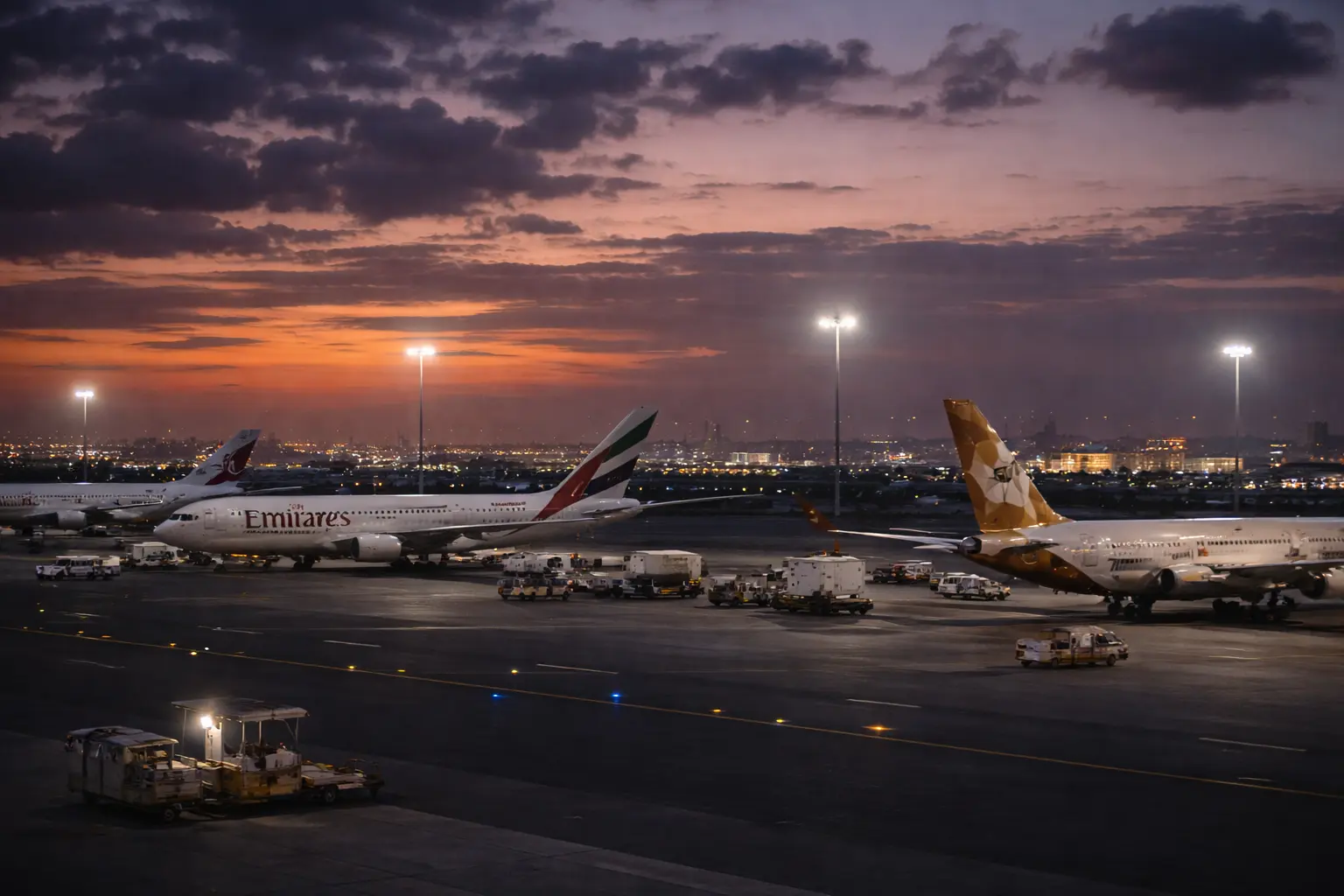
Hundreds of thousands of travelers found themselves stranded or diverted as airspace closures swept across the Middle East amid rising tensions. Airports in key hubs, including Dubai and Abu Dhabi, halted flights temporarily, leaving international and regional travel in disarray. The closures forced airlines to cancel or reroute flights, causing widespread travel disruption for passengers and airline operations alike.
Airlines in the region took unprecedented measures to suspend or delay flights as governments prioritized safety due to ongoing military activity. The suspension affected connections across Europe, Asia, Africa, and North America due to the region’s position as a global air travel crossroads. Passengers planning trips through the Gulf found themselves stuck abroad or forced to seek alternative routes.
Stranded Passengers and Diverted Flights
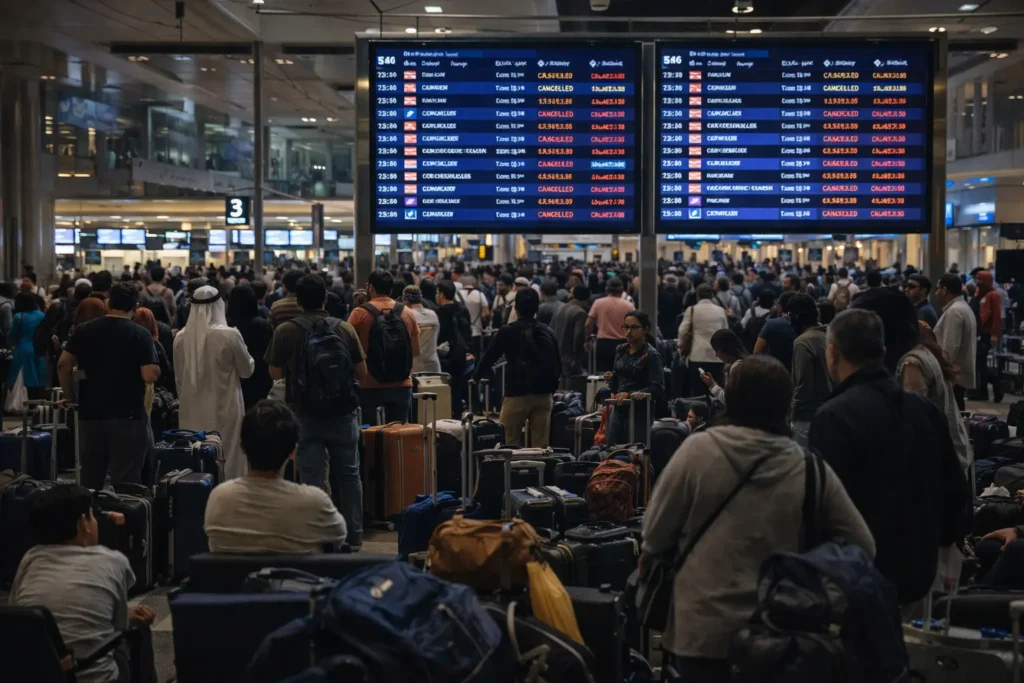
Travel chaos quickly unfolded as flights were grounded in major Middle Eastern hubs. Thousands of travelers waited in long queues amid restaurants and airport lounges, unsure when they could resume their journeys. Many flights approaching the region were diverted to alternative airports, adding hours of delay and inconvenience.
The sudden closures also impacted transit passengers with connecting flights, who were forced to reschedule or cancel onward travel. Travel forums and social media platforms were flooded with posts from concerned passengers sharing their experiences of delays and disruptions. Airlines issued guidance urging affected travelers to remain patient as operations attempted to adapt to rapidly changing circumstances.
Dubai’s Role as a Global Transit Hub
Dubai, known as a major international transit hub, felt the full impact of the closures. Flights in and out of Dubai International Airport were among the first to be affected, disrupting connections across continents. The airport, which normally handles thousands of flights daily, saw platforms and terminals crowded with travelers seeking updated schedules.
Passengers already in transit scrambled to find nearby hotels or waiting areas within the airport as departure boards continued to change. Airlines worked to communicate updates, but frequent changes in flight status made planning difficult for many. Some travelers depended on airline staff physically present in terminals to assist with rebooking or accommodation queries.
Celebrity Voices: Amid Chaos, Sonal Chauhan Speaks Out
Amid the confusion, Indian actress Sonal Chauhan, who was among those stranded in Dubai, shared her experience on social media. She assured her followers that she was safe, describing Dubai as “the safest place in the world” despite the travel chaos unfolding around her. Her message offered reassurance to fans and fellow travelers during a stressful time.

Chauhan’s update reflected a broader sentiment among stranded passengers about prioritising safety over travel concerns. Many travelers echoed similar views online, expressing relief at being in secure locations even as their travel plans were disrupted. The reactions showed how people were balancing concern for safety with the frustration of being stranded.
Emotional Toll on Travelers
For many passengers, the situation was more than just a delay; it became an emotional ordeal. Families travelling with children faced anxiety as they waited for information and updates. Business travellers also expressed concerns about missed meetings and timelines.
Travelers reported mixed experiences, with some sharing stories of supportive airline staff and others frustrated with communication gaps. Social media was filled with testimonials from passengers seeking help, offering a glimpse into the human side of travel disruptions.
Airline and Government Responses
Airlines impacted by the closures worked to assist affected passengers with rebooking options and hotel accommodations where possible. Many carriers extended customer service hours and increased online support to deal with the surge in requests. Authorities also worked to maintain order in crowded airport terminals and reassure travelers that safety was the top priority.
Government agencies issued travel advisories, urging citizens and residents to stay updated with official airline and airport notifications. Many urged travelers to avoid nonessential travel until the airspace situation stabilized. The overall focus remained on ensuring passenger safety and restoring order to air travel routes.
Regional Aviation Adjustments
To manage the closures, many airlines rerouted flights around restricted airspace or delayed departures until authorities signaled that operations could safely resume. These adjustments often increased flight durations and added logistical challenges for pilots and airline crews.
Airlines coordinated with aviation authorities to track real-time developments and make informed routing decisions. These efforts aimed to strike a balance between maintaining connectivity and ensuring passenger safety amid a tense geopolitical climate.
Practical Tips for Affected Travelers
In the wake of the chaos, passengers learned to adapt and stay informed. Airlines encouraged travelers to check official airline apps and airport websites for the latest flight status updates. Many passengers explored alternate travel options such as connecting through different cities or adjusting travel dates.
Public announcements and news updates played a crucial role in helping passengers make decisions. Travelers were also advised to keep their travel documents accessible and maintain regular communication with family members about their status.
Airport lounges became temporary refuges for weary passengers seeking comfort and Wi-Fi connectivity while they awaited updates. Others made the best of the situation by resting in designated seating areas or mingling with fellow stranded travelers.
A Broader Look at Global Travel Impact
The Middle East’s position as a central hub for international travel means disruptions in this region can have ripple effects around the world. Airlines in distant regions such as North America and Europe reported follow-on cancellations and schedule changes due to the knock-on effects of airspace closures.
Travel agents and airline industry analysts noted that major global carriers were adjusting flight plans and forecasting delays for the coming weeks. The full impact on international travel bookings and airline revenue remained unclear as authorities worked toward restoring normal operations.
Airspace closures in the Middle East also highlighted the interconnected nature of global aviation. What began as a regional geopolitical dispute quickly affected passengers and airlines far beyond the Gulf, showing how tensions can influence international mobility.
Also Read: UAE Airlines Extend Flight Cancellations Amid Escalating Iran Conflict
Looking Ahead: Monitoring and Updates
Authorities across the Middle East continued to monitor the situation closely, ready to adjust airspace and flight operations as conditions evolve. Aviation experts emphasized the need for real-time data sharing between airlines, governments, and passengers to minimize disruption.
For travelers planning future trips, flexibility and preparedness became key themes in navigating uncertain travel conditions. Some began exploring travel insurance options that cover geopolitical disruption. Others awaited official communication before making new travel arrangements.
In the ever-changing landscape of international travel, passengers and airlines both remain hopeful for a return to normal flight operations. Vigilance, clear communication, and cooperation between aviation authorities and airlines are essential to restoring confidence in travel amid global uncertainties.