

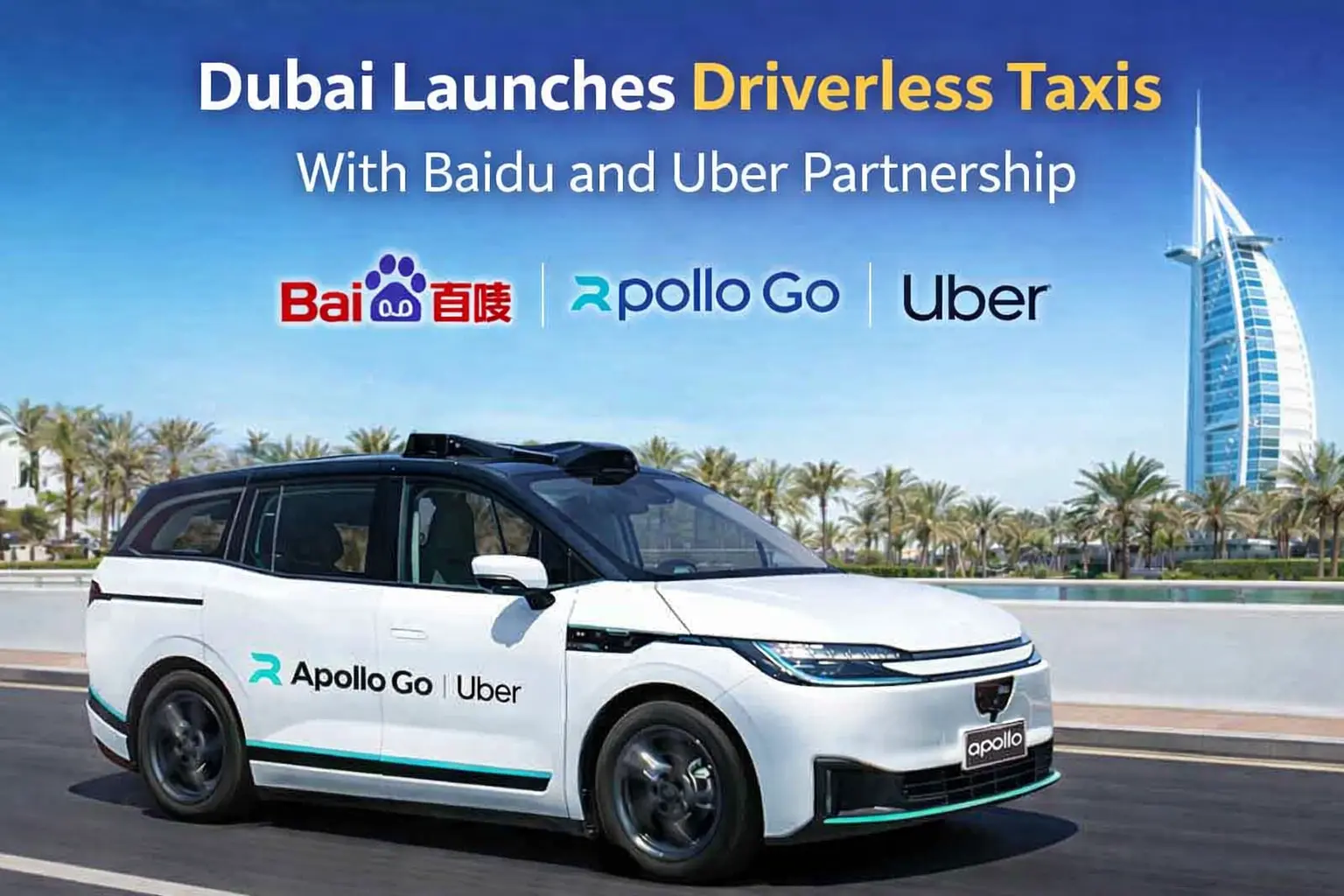
Dubai continues to lead innovation in smart mobility by introducing driverless taxi services powered by artificial intelligence. The latest development involves a partnership between Baidu, Uber, and Dubai’s Roads and Transport Authority to deploy autonomous ride-hailing taxis across the city. This initiative aims to improve transport efficiency, reduce traffic congestion, and position Dubai as a global hub for future mobility technology.
The rollout of autonomous taxis reflects Dubai’s broader vision of integrating advanced technology into everyday transportation. With smart infrastructure, strong regulatory support, and high demand for modern transport solutions, the city is quickly becoming a testing ground for cutting-edge mobility innovations.
Table of Contents
Baidu and Uber Partnership for Driverless Taxis
Baidu and Uber have partnered with Dubai’s Roads and Transport Authority to introduce Apollo Go autonomous ride-hailing vehicles to the city. The service is expected to launch soon through the Uber app, allowing passengers to book fully autonomous rides in selected areas initially. The service will expand gradually based on operational performance and regulatory approvals.
This partnership marks an important step in global expansion for autonomous vehicle technology. Baidu’s Apollo Go system has already completed millions of rides worldwide and operates across multiple cities, demonstrating the maturity of its self-driving platform.
Initial Launch Areas and Availability
Driverless taxis will initially operate in selected locations such as parts of the Jumeirah area. Users will be able to request these rides directly through the Uber application by selecting the autonomous ride option. The service will expand citywide as operational data grows and regulatory approvals continue.
Early deployment in limited areas allows authorities to monitor safety, passenger experience, and traffic integration before scaling across Dubai.
Fleet Expansion Plans and Future Scale
Dubai plans a gradual expansion of autonomous taxis over the coming years. Authorities aim to grow the robotaxi fleet to more than 1,000 vehicles as part of long-term mobility goals.
This expansion supports Dubai’s strategy to make autonomous transport a major part of daily commuting. The emirate targets a significant portion of all journeys to be autonomous by 2030, reflecting its ambition to become a global leader in smart transport innovation.
How Driverless Taxi Technology Works
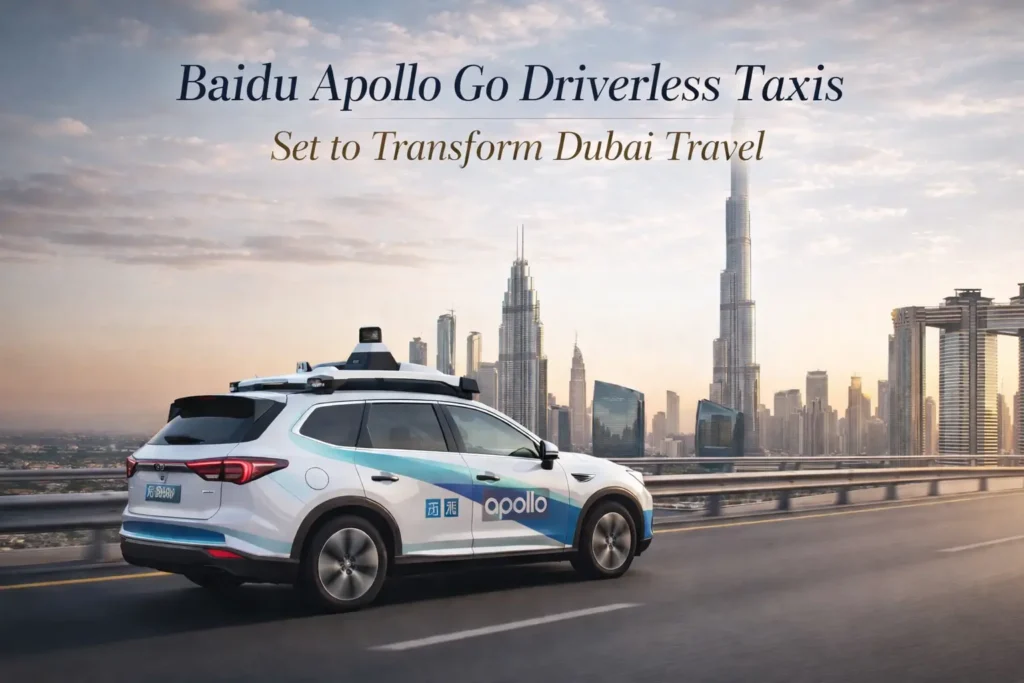
Autonomous taxis rely on advanced artificial intelligence, sensors, cameras, radar systems, and real-time mapping technology. These systems help vehicles detect surroundings, predict movement, and make driving decisions without human intervention.
Passengers simply book rides through mobile apps, similar to regular ride-hailing services. The AI system manages navigation, traffic interaction, and safety monitoring, ensuring smooth and efficient travel.
Continuous data analysis improves performance over time, making autonomous vehicles safer and more efficient with each journey.
Benefits of Autonomous Taxis in Dubai
Driverless taxis bring several advantages to urban transportation. Safety improvement is one of the main benefits, as AI systems reduce human error, which is a leading cause of road accidents.
Autonomous taxis can also enhance convenience by providing consistent service availability without driver scheduling limitations. Reduced congestion, optimized routing, and improved fuel efficiency contribute to a more sustainable transport system.
These innovations align with Dubai’s vision of smarter, safer, and environmentally friendly mobility solutions.
Economic and Technological Impact
The introduction of AI-powered taxis is expected to boost Dubai’s economy by attracting technology investments, supporting innovation, and creating new opportunities in AI development, engineering, and smart infrastructure.
Autonomous transport projects also strengthen Dubai’s reputation as a global innovation hub. The city continues to invest heavily in smart city initiatives, including autonomous vehicles, air taxis, and intelligent traffic management systems.
These initiatives support long-term economic growth while enhancing urban living standards.
Also Read: Top 5 Romantic Restaurants in Dubai for Date Nights and Special Occasions
Safety Regulations and Testing Phase
Before full deployment, autonomous taxis undergo extensive testing and regulatory evaluation. Authorities monitor system reliability, passenger safety, and real-world traffic interaction.
Early trials often include safety operators or controlled testing environments to ensure compliance with safety standards. Once performance meets required benchmarks, fully driverless operations expand gradually.
Dubai’s regulatory framework ensures that innovation moves forward while maintaining strong safety standards.
Public Response and Adoption Trends
Public interest in autonomous transport has grown rapidly as awareness increases. Many residents are curious about the convenience, safety, and futuristic appeal of driverless taxis.
Initial adoption often depends on trust, reliability, and positive user experiences. As technology proves its effectiveness, acceptance typically increases.
Dubai’s diverse population and technology-friendly environment make it an ideal location for early adoption of smart mobility solutions.
Dubai’s Vision for Future Mobility
Autonomous taxis are part of a broader smart transport strategy that includes intelligent traffic systems, sustainable transport solutions, and integrated mobility networks. The goal is to provide seamless, efficient travel across the city.
Dubai’s commitment to innovation ensures continued advancements in transport technology, improving urban mobility while supporting economic growth and environmental sustainability.