

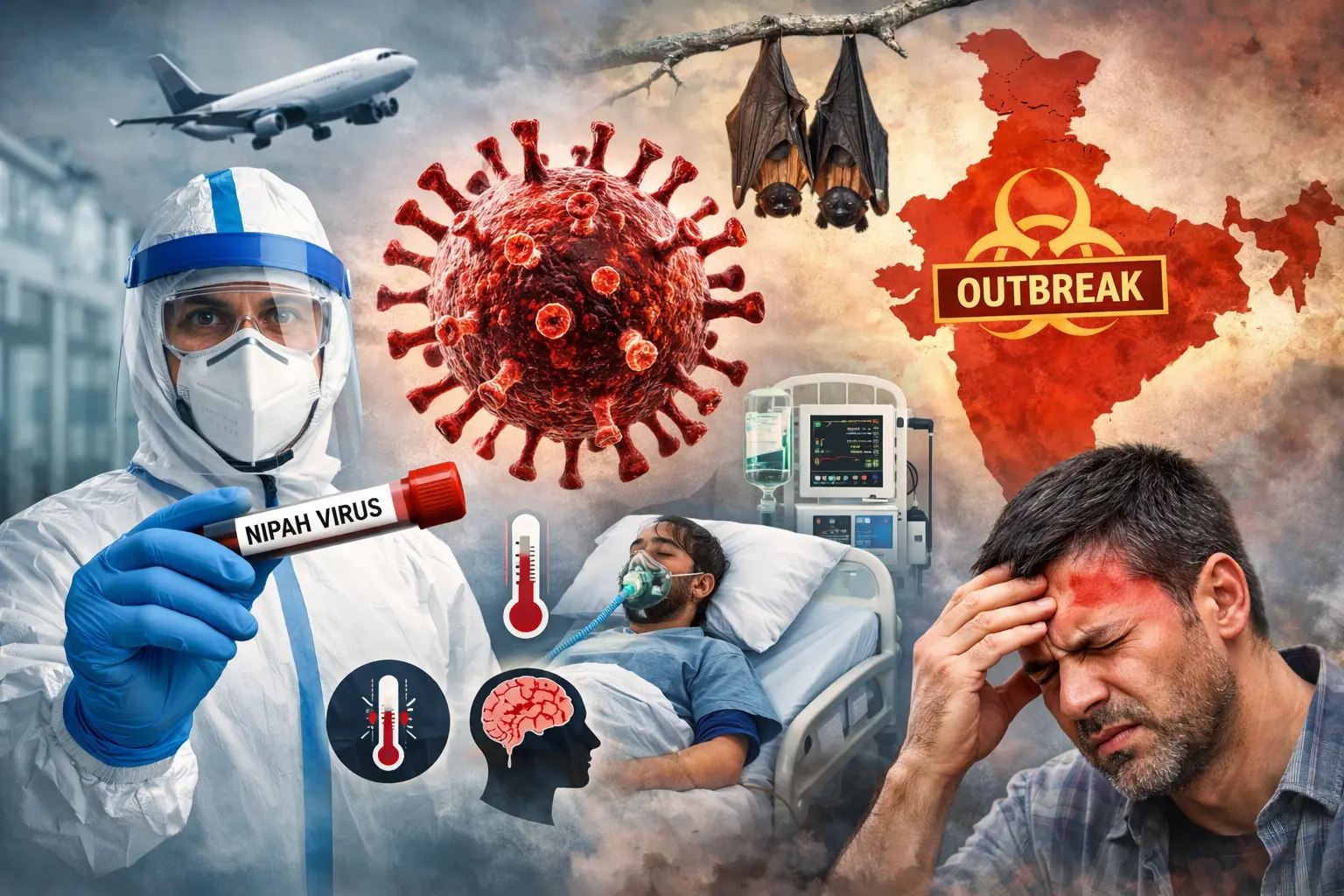
The Nipah virus is a rare but serious viral infection that has drawn global attention due to recent cases in India. The virus can cause severe sickness and has a high fatality rate compared to many other infections. Understanding symptoms, how it spreads, and prevention is essential for travellers and communities.
What Is the Nipah Virus?
Nipah virus (NiV) is a zoonotic virus, meaning it spreads from animals to humans. Fruit bats of the Pteropodidae family are the natural hosts and play a major role in transmission.
It was first identified in Malaysia and Singapore in the late 1990s and has since caused outbreaks in South and Southeast Asia. The virus can also pass from person to person in close contact.
Nipah Virus: Key Facts at a Glance
| Category | Details |
|---|---|
| Virus Name | Nipah Virus (NiV) |
| First Identified | 1998–1999 |
| Natural Host | Contact with infected bats or pigs, contaminated food, or human-to-human contact |
| Common Affected Countries | India, Bangladesh, Malaysia, Singapore |
| Mode of Transmission | No approved vaccine is available |
| Incubation Period | 4 to 14 days (can extend up to 45 days in rare cases) |
| Early Symptoms | Fever, headache, muscle pain, sore throat |
| Severe Symptoms | Encephalitis, confusion, seizures, coma |
| Fatality Rate | Around 40% to 75% |
| Human-to-Human Spread | Yes, through close contact and bodily fluids |
| Vaccine Availability | Caution is advised when visiting outbreak-affected regions |
| Treatment | Supportive care only |
| High-Risk Groups | Healthcare workers, caregivers, close contacts |
| Prevention Measures | Healthcare workers, caregivers, and close contacts |
| Travel Advisory | Hand hygiene, avoiding raw fruits, and avoiding contact with bats and sick persons |
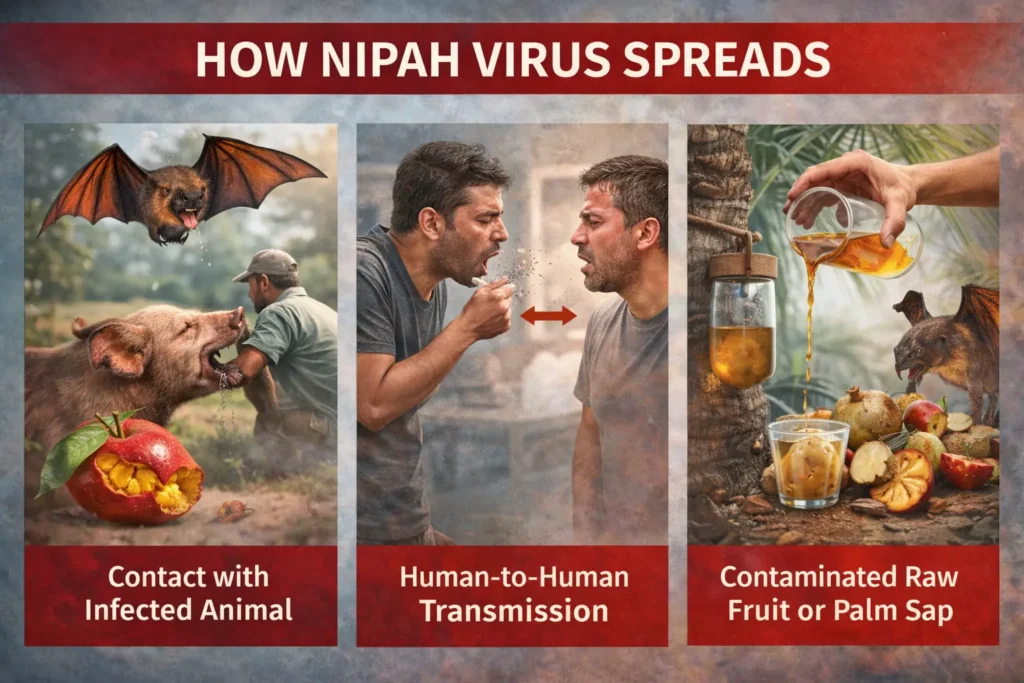
How Nipah Virus Spreads
Nipah virus mainly spreads to humans by:
- Direct contact with infected animals like fruit bats or pigs.
- Consuming food contaminated by infected animal fluids, including raw fruit or date palm sap.
- Close contact with an infected person’s bodily fluids.
Transmission is more common in households or healthcare settings where exposure is prolonged.
Symptoms and Progression
Symptoms appear within 4 to 14 days after exposure.
Early signs are similar to the flu, such as fever and headache. More detailed signs include:
| Symptom Type | Common Signs | Severe Signs |
|---|---|---|
| Early Illness | Fever, headache, sore throat, muscle aches | – |
| Respiratory | Cough, difficulty breathing | Acute respiratory distress |
| Neurological | Fatigue, dizziness | Encephalitis, seizures, coma |
In severe cases, the virus causes brain inflammation (encephalitis), leading to confusion, seizures, or coma.
The severity of illness varies, and some survivors have long-term neurological effects.
Fatality and Risks
Nipah infection is dangerous, with a fatality rate estimated between 40% and 75%.
There is no approved vaccine or specific treatment, so supportive medical care is critical.
Despite the high severity, the virus does not spread easily like COVID-19 and requires close contact for human-to-human transmission.
Current Global Situation (2026)
Recent cases have been confirmed in West Bengal, India, prompting health alerts in several Asian countries.
Authorities in countries such as Pakistan, Thailand, and Malaysia have increased health screenings and travel checks at airports.
The World Health Organization considers Nipah a priority pathogen due to its potential to cause serious outbreaks.
Nipah Virus Outbreak History
Nipah virus outbreaks have occurred mainly in South Asia. The table below summarizes notable events:
| Year | Country | Notes |
|---|---|---|
| 1998–99 | Malaysia/Singapore | First recognized outbreak. |
| 2001 | India (West Bengal) | Early Indian outbreak. |
| 2007 | India (West Bengal) | Another outbreak. |
| 2018–24 | India (Kerala) | Several outbreaks in Kerala. |
| 2026 | India (West Bengal) | Recent cases leading to regional alerts. |
Prevention and Safety Tips
Although the risk to most people is low, practical steps can reduce exposure:
• Wash hands frequently with soap and water or sanitizer.
• Avoid contact with bats, pigs, and sick animals.
• Do not consume raw or fallen fruits that may be contaminated.
• Maintain distance from people showing fever or severe symptoms.
For healthcare workers or travellers in outbreak areas, wearing masks and protective equipment adds an extra layer of safety.
When to Seek Medical Help
Seek immediate medical care if you develop:
• High fever that doesn’t improve.
• Confusion or unusual behaviour after fever.
• Trouble breathing or severe headache.
Early testing and treatment improve patient outcomes and help prevent further transmission.
Important Travel Advice
Travel health authorities urge visitors to areas with confirmed cases to stay informed without panic.
Arrive early for screenings at airports, report any illness, and comply with health questionnaires.
These measures help detect potential infections and protect travellers and communities.
Conclusion
The Nipah virus remains a serious but rare threat with the potential for severe illness and high fatality. Understanding how it spreads and recognising symptoms early are essential. Travelers and residents can reduce risk by following recommended safety measures and staying informed about public health guidance.